
Design, Manufacture, Installation, Debugging, Service
Bringing Together Talent in the “Chang” Triangle, Leading the “New” Future with Intelligence — Ruihua Technology Co‑hosted the 4th East China University of Science and Technology Industry Forum, Empowering Industrial Innovation and Upgrading.
2026-07-13

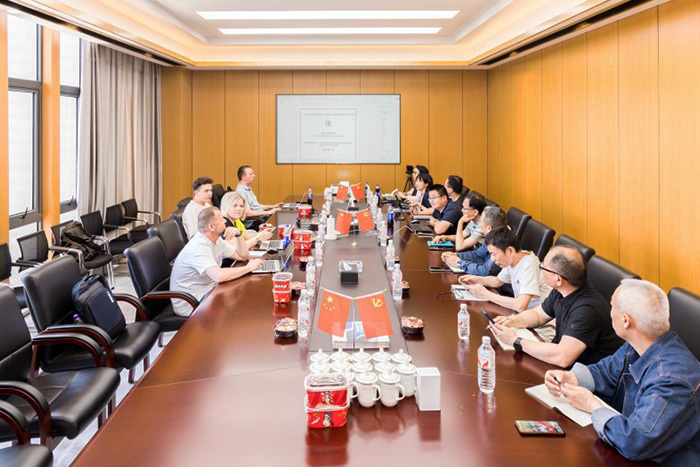
On July 11, the Fourth East China University of Science and Technology Industry Forum was held in Changzhou, Jiangsu Province. Attending the forum were Jiang Chuanhai, Secretary of the Party Committee of East China University of Science and Technology; Pan Dongling, Vice Mayor of the Changzhou Municipal People’s Government; Li Tao, Deputy Secretary of the Party Committee of East China University of Science and Technology; Academician Chen De of the European Academy of Sciences; Academician Wang Jin’an of the Mexican Academy of Sciences; Li Kun, President of the Jiangsu Provincial Enterprise Federation and President of the ECUST Nanjing Alumni Association; and Zhu Hongbin, Executive Vice President of Xinmeng Technology Co., Ltd. Experts and scholars from across the country, alumni entrepreneurs, representatives from relevant commissions and bureaus, specially invited industry guests, and delegates from the university’s affiliated secondary units gathered for the event.

In his address, Li Tao extended a warm welcome to the leaders, distinguished guests, and the broader alumni community in attendance. He provided a concise overview of the university’s high‑quality achievements in recent years across key areas, including strategic planning, discipline development, scientific and technological innovation, talent cultivation, and institutional support. He emphasized that the university will continue to join forces with its alumni‑led enterprises and all sectors of society to forge an innovation‑driven community characterized by closer ties and deeper collaboration, striving to write a new chapter in the integration of academia and industry and in the synergy between education and the workforce. In doing so, the university aims to make fresh and even greater contributions to accelerating the development of new‑type productive forces, building a modern industrial system, and advancing the comprehensive modernization of China.

Pan Dongling, on behalf of the local government, extended warm congratulations on the forum’s establishment in Changzhou and provided a comprehensive overview of the city’s industrial strengths in the field of scientific and technological innovation. He noted that Changzhou has attracted a large number of HUST alumni deeply committed to the real economy, who have long been rooted in the region, empowering the real sector and making significant contributions to the city’s high‑quality development. At present, the new energy and new materials industries are experiencing a new wave of growth, presenting valuable opportunities for deepening cooperation between Changzhou and HUST. He expressed his hope that this forum will serve as a fresh starting point for strengthening two‑way collaboration between the university and the city, leveraging HUST’s disciplinary strengths in “two new areas and two major fields” to bring more cutting‑edge technologies and innovative talent to Changzhou, and jointly build a model for industry–university–research integration in the Yangtze River Delta.
Main Forum – Presentation Session

During the keynote session, Jiang Chuanhai delivered a special presentation on the current macroeconomic landscape and the pathways for high-quality development during the 15th Five-Year Plan period. He analyzed that China’s economy has long exhibited a steady L-shaped growth trajectory, while at present, industrial recovery is marked by a pronounced K-shaped structural divergence: emerging sectors such as new energy, new materials, artificial intelligence, and advanced manufacturing are accelerating upward, whereas traditional industries continue to adjust, with clear structural disparities across industry, consumption, and employment. He argued that the 15th Five-Year Plan period represents a critical phase for consolidating the country’s 2035 vision and fostering new drivers of growth. To this end, it is essential to uphold scientific and technological self-reliance and self-strengthening, accelerate the development of new‑type productive forces, and promote the transformation and upgrading of traditional industries, the quality improvement and expansion of emerging industries, and the forward‑looking strategic deployment of future‑oriented sectors. Furthermore, he called for deepening integrated reforms of the systems and mechanisms governing education, science and technology, and talent, and for fostering the deep integration of innovation, industrial, financial, and human‑resource chains, thereby leveraging the construction of a modern industrial system to steadily advance Chinese‑style modernization.

Chen De delivered a presentation focusing on the global energy transition and its industrial implementation. He assessed cutting-edge trends in new energy, energy storage, and next-generation energy materials, and, drawing on Changzhou’s strengths as a hub for the new‑energy industry, analyzed the development opportunities and technological pathways for green, low‑carbon industries. His insights offer forward‑looking perspectives and expert guidance for the regional energy sector’s transformation and upgrading, as well as for university–enterprise collaborations in green science and innovation.

Drawing on a global perspective, Wang Jin’an analyzed the current state of China–Mexico industrial cooperation, its strengths, and potential risks. He noted that Mexico, benefiting from its strategic location, free-trade policies, and demographic dividend, has become a key foothold for Chinese companies seeking to establish a presence in the North American market. He emphasized the substantial cooperative potential between the two countries in sectors such as chemicals, advanced materials, and high-end manufacturing, and recommended that universities and enterprises carefully assess opportunities while mitigating development risks, thereby supporting alumni‑run firms in their international expansion.
 i
i
Li Kun shared his insights on the transformation of Jiangsu’s real economy and the high-quality development of enterprises. Drawing on Jiangsu’s strengths in manufacturing and prevailing trends in industrial upgrading, he highlighted that companies today urgently need to overcome bottlenecks in core technologies, advanced materials, and green, low-carbon initiatives. He noted that East China University of Science and Technology’s flagship disciplines align closely with regional industrial needs, expressing his hope that, by leveraging its alumni network, the university can deepen industry–university–research collaboration to tackle key challenges, facilitate the practical application of innovative成果, and support Jiangsu’s efforts to enhance industrial quality and upgrade its sectors while fostering enterprise innovation and growth.

Zhu Hongbin focused his presentation on the theme of domesticating core semiconductor materials. He provided a concise overview of the technical standards and process requirements for critical chip materials, analyzed the current status of domestic substitution in the semiconductor materials sector, identified existing technological barriers, and outlined key areas for breakthroughs. He further advocated for deepening industry–university–research collaborative innovation, accelerating efforts to address industry‑wide shortcomings, and establishing an independent, controllable semiconductor materials supply chain system.
Roundtable Forum – “Macro Strategy for the Chemicals and New Materials Cycle”

Xu Zhigang, Chairman of Changzhou Ruihua Chemical Engineering Technology Co., Ltd., was invited to serve as a roundtable guest, engaging in in-depth discussions alongside industry leaders. The event focused on key topics such as breakthroughs in critical technologies, the commercialization of research‑industry‑university collaborations, alumni‑industry synergy, and the internationalization of enterprises, bringing together industry insights, forging collaborative partnerships, and jointly charting pathways for future development.


Sub-forum – Presentation Session
That afternoon, two parallel sub-forums—on semiconductors and new materials, and on energy and chemical engineering—were held concurrently. Guests from various sectors and alumni engaged in in-depth discussions on topics such as technological breakthroughs in specialized fields, supply-chain collaboration, and joint talent development, forging a shared vision for collaborative innovation and mutually beneficial cooperation.

Zhou Haiyan delivered a focused presentation titled “Research and Industrialization of Styrene Copolymers.” She systematically reviewed the technological R&D trajectory of styrene copolymers, their core process advantages, and the directions for performance refinement and upgrading. Drawing on current application demands in downstream sectors such as new energy, high-end manufacturing, and advanced materials, she elaborated on the key technical milestones for industrializing styrene copolymers, strategies for optimizing mass production, and the distinctive benefits of scenario‑specific applications.

Wu Gangjian presented a special report titled “Market, Processes, and Application Trends of PET Polyester Products,” offering a comprehensive analysis of the current global market landscape, supply-and-demand dynamics, and the strengths and limitations of mainstream production technologies. The report also provides an in-depth examination of cutting-edge industry trends, including the evolution of green, low-carbon manufacturing processes, the development of high-end modified materials, and the expansion into emerging application areas.

Building on Changzhou’s robust industrial foundation, this year’s forum has aligned precisely with the university’s core development strategy, establishing a high‑level platform for exchange and collaboration that brings together academician leadership, university–local government synergy, alumni engagement, and integrated industry–university–research cooperation. This has effectively fostered the sharing of ideas, the interconnection of resources, and the mutual translation of research outcomes, further enhancing the brand reputation of the “HuaLi Industry Forum.”
As a co-organizer of this forum, Ruihua Technology has actively integrated itself into the Yangtze River Delta’s industrial innovation ecosystem through deep engagement and comprehensive support, serving as a vivid example of the company’s commitment to fostering close collaboration among industry, academia, and research. With many years of expertise in chemical engineering and new materials, Ruihua Technology remains steadfast in its core principles of “technological innovation, serving the nation through industry, and win‑win collaboration.” Leveraging its robust R&D capabilities and mature industrialization experience, the company is deeply committed to advancing in the key areas of fine chemicals and high‑end new materials.


Tel:0519-85260165
Email:ruikaicz@sina.com
Address: No. 68, Changrui Road, Rulin Town, Jintan District, Changzhou City, Jiangsu Province
Website:http://www.czrk.net/
Online Message
* Note: Please fill in the information accurately and keep the communication open. We will contact you as soon as possible.