
Design, Manufacture, Installation, Debugging, Service
Breaking New Ground, Enhancing Quality through Green Practices | Ruihua Co‑hosts a Major Industry Event, Empowering High‑Quality Development of the Epoxy Industry Chain
2026-06-02

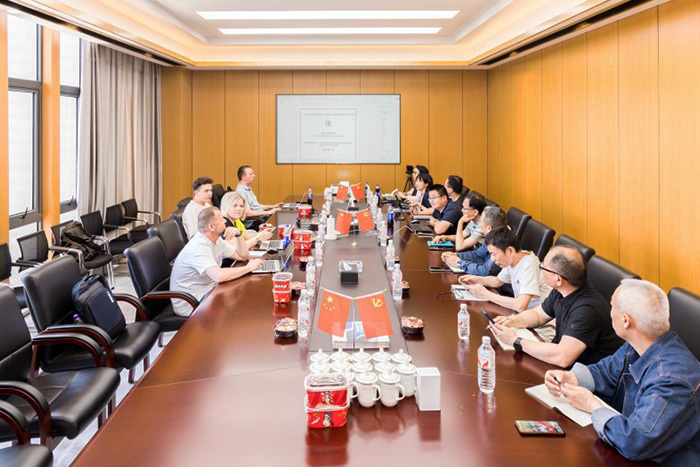
Faced with dramatic shifts in the market environment, how can the propylene oxide industry break through and achieve high-quality development? On May 27, the 2026 (8th) Propylene Oxide Industry Chain Innovation and Development Conference, together with the Propylene Chloride Technology and Market Exchange Meeting, was held in Yichang, Hubei Province. Hosted by China Chemical News Co., Ltd. and co-organized by Changzhou Ruihua Chemical Engineering Technology Co., Ltd., the event brought together leading experts, scholars, and industry representatives, charting a path for the high‑quality development of China’s propylene oxide sector: leveraging technological innovation and upgrading to drive green and high‑end growth, and opening up new, high‑value‑added markets.

At the conference, Wu Feike, General Manager of Ruihua Technology, highlighted the industry’s relentless drive for innovation and the significant advances made in process technology. He noted that the company currently boasts three core technologies in the PO process, backed by more than 20 technical patents. Among these, the propylene oxide–styrene co‑production (POSM) process has been successfully implemented in several major projects in recent years, with its advanced performance, safety, and environmentally friendly attributes thoroughly validated. Meanwhile, the cumene‑based (CHPPO) and isobutane‑based (POHPIB) processes have also reached maturity. Ruihua will continue to deliver proprietary patented technologies and equipment in the PO sector, supporting the industry’s transformation and upgrading.

During the industry‑focused sessions and interactive discussions, five seasoned industry experts delved into key topics such as the industrialization progress of various process routes, the strategic planning of the propylene oxide and epichlorohydrin value chains, and relevant industrial policies.
Looking ahead, Ruihua Chemical will remain committed to the principles of “technological innovation and green development,” deepen its investment in core‑technology R&D, and refine its technology‑and‑engineering service system. By leveraging its scientific and technological prowess, the company will drive collaborative upgrades across the industrial chain, help the sector navigate complex market conditions with resilience, and steer the industry toward new, high‑end, high‑value growth trajectories.
Propylene oxide/styrene coproduction process
1
Overview
Propylene oxide is the third-largest propylene-derived product, after polypropylene and acrylonitrile. It serves as a key feedstock for the production of polyether polyols—used to manufacture polyurethanes—as well as numerous downstream products such as propylene glycol and alcohol ethers, making it an important basic raw material in organic chemical synthesis.
The propylene oxide–styrene co‑production technology (POSM) is a process well suited for large-scale refining and petrochemical complexes, particularly those with abundant aromatics and olefins. Compared with the conventional chlorohydrin process, it offers significant environmental advantages. This integrated unit can simultaneously produce propylene oxide and styrene, enabling shared use of feedstocks, energy, and equipment, thereby enhancing resource utilization efficiency.
2
Process flow
The Ruihua POSM process uses ethylbenzene and propylene as feedstocks to produce propylene oxide and styrene. Ethylbenzene is reacted with oxygen in a plug‑flow peroxidation reactor to form ethylbenzene hydroperoxide (EBHP). After alkaline washing and concentration, the high‑concentration EBHP is sent to the epoxidation reactor. In the presence of a solid titanium‑silicon catalyst, EBHP reacts with propylene to yield propylene oxide and phenylethanol, with acetophenone as a byproduct; the final product, propylene oxide, is obtained following purification.
The mixture containing ethylbenzene, phenylethanol, and acetophenone is sent to the dehydration unit, where phenylethanol is converted into styrene over a solid dehydration catalyst. After purification, the styrene product is obtained, while the ethylbenzene, having had impurities removed, is recycled back to the oxidation unit. This dehydration catalyst exhibits outstanding performance, achieving a selectivity for both styrene and acetophenone exceeding 99%, with minimal tar formation and a significantly extended operating cycle. Acetophenone is hydrogenated to phenylethanol in the presence of a copper-based catalyst, and the hydrogenation product is returned to the dehydration unit for further processing.

3
Success Stories

Guoen Chemical (formerly CITIC Guoan Chemical): 80,000–200,000 tons/year POSM plant

Zhejiang Petrochemical: 270,000/600,000 tons/year POSM unit

China National Petroleum Corporation Guangxi Petrochemical: 27/600,000 tons/year POSM unit
4
Features and Advantages
(1) A plug-flow peroxidation reactor is employed, effectively addressing liquid-phase backmixing, reducing the decomposition of ethylbenzene hydroperoxide (EBHP), and enhancing peroxide selectivity.
(2) An isothermal epoxidation reactor is employed, effectively preventing potential runaway reactions or incomplete oxidation of peroxides during the epoxidation process, thereby increasing the yield of the target product and reducing material consumption.
(3) A radial dehydration reactor is employed, leveraging radial flow technology and optimizing the design of the inlet and outlet flow channels, thereby endowing the reactor with advantages such as uniform fluid distribution and low bed pressure drop.
(4) The low‑temperature heat from the unit is utilized to produce hot water or steam, thereby reducing both the overall steam consumption and the circulating cooling water consumption, resulting in a significant reduction in energy use.
Process for the Preparation of Propylene Oxide via Cumene Hydroperoxide
1
Overview
Propylene oxide is the third-largest propylene-derived product, after polypropylene and acrylonitrile. It serves as a key feedstock for the production of polyether polyols—used to manufacture polyurethanes—as well as numerous downstream products such as propylene glycol and alcohol ethers, making it an important basic raw material in organic chemical synthesis.
The cumene hydroperoxide–based propylene oxide (CHPPO) process is particularly well suited to refineries with abundant aromatics and olefins resources. Compared with the conventional chlorohydrin process, CHPPO offers significant environmental advantages. Moreover, when contrasted with the direct oxidation of hydrogen peroxide to propylene oxide (HPPO) process, CHPPO exhibits markedly superior safety characteristics.
2
Process flow
Ruihua’s CHPPO technology uses propylene as the feedstock and cumene hydroperoxide (CHP) as the oxidant to produce propylene oxide via the oxidation of propylene. Cumene and oxygen undergo an autocatalytic reaction to form CHP; after alkaline washing and concentration, the high‑concentration CHP is fed into the epoxidation reactor. In the presence of a solid titanium–silicon catalyst, the concentrated CHP reacts with propylene in an epoxidation process, yielding propylene oxide and dimethylbenzyl alcohol; the product is then purified to obtain the final propylene oxide.
The mixture containing dimethylbenzyl alcohol and cumene is sent to the hydrodealkylation unit, where dimethylbenzyl alcohol is hydrogenated to produce cumene. After impurities are removed, the cumene is recycled back to the oxidation unit.

3
Features and Advantages
(1) The peroxide reactor is a vertical bubble‑column reactor with uniform internal temperature and concentration profiles. It employs an external circulation heat‑removal system to ensure efficient removal of reaction heat, thereby ensuring safe and stable operation of the unit.
(2) An isothermal epoxidation reactor is employed, effectively preventing potential runaway reactions or incomplete oxidation of peroxides during the epoxidation process, thereby increasing the yield of the target product and reducing material consumption.
(3) The hydrogenolysis catalyst exhibits excellent performance, with high cumene selectivity, low tar formation, and a long operating cycle, thereby effectively reducing material consumption.
(4) The low‑temperature heat from the unit is utilized to produce hot water or steam, thereby reducing both the overall steam consumption and the circulating cooling water consumption, and significantly lowering energy consumption.
Propylene oxide/tert-butanol co-production process
1
Overview
Propylene oxide is the third-largest propylene-derived product, after polypropylene and acrylonitrile. It serves as a key feedstock for the production of polyether polyols—used to manufacture polyurethanes—as well as numerous downstream products such as propylene glycol and alcohol ethers, making it an important basic raw material in organic chemical synthesis.
The propylene oxide–tert-butanol co‑production technology (POTBA) is particularly well suited for enterprises that rely solely on olefin feedstocks. Compared with the conventional chlorohydrin process, POTBA offers significant environmental advantages. This process not only produces propylene oxide but also co‑produces tert‑butanol (TBA) or methyl tert‑butyl ether (MTBE), thereby enhancing resource utilization.
2
Process flow
Ruihua’s POTBA technology uses isobutane and propylene as feedstocks to produce propylene oxide and tert-butanol. Isobutane undergoes an autocatalytic reaction with oxygen to form tert-butyl hydroperoxide (TBHP). After alkaline washing and concentration, the high‑concentration TBHP is fed into the epoxidation reactor. In the presence of a solid titanium–silicon catalyst, the concentrated TBHP reacts with propylene in an epoxidation process, yielding propylene oxide and tert-butanol; these products are then purified to obtain commercial-grade propylene oxide and tert-butanol.

3
Features and Advantages
(1) A dual-component carrier gas consisting of isobutane and nitrogen was configured in varying proportions, and by controlling the introduction of oxygen into the reactor at a safe concentration, the safety and operability of the isobutane oxidation reaction were ensured.
(2) An isothermal epoxidation reactor is employed, effectively preventing potential runaway reactions or incomplete oxidation of peroxides during the epoxidation process, thereby increasing the yield of the target product and reducing material consumption.
(3) Co‑products such as tert‑butanol (TBA), methyl tert‑butyl ether (MTBE), or isobutylene can be adjusted according to downstream market demand and economic viability.
(4) The low‑temperature heat from the unit is utilized to produce hot water or steam, thereby reducing both the overall steam consumption and the circulating cooling water consumption, and significantly lowering energy consumption.


Tel:0519-85260165
Email:ruikaicz@sina.com
Address: No. 68, Changrui Road, Rulin Town, Jintan District, Changzhou City, Jiangsu Province
Website:http://www.czrk.net/
Online Message
* Note: Please fill in the information accurately and keep the communication open. We will contact you as soon as possible.